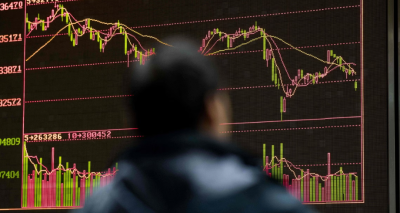
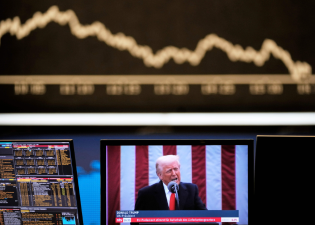
International capital flows refer to the transfer of capital between different countries or regions, also known as international capital transfers. They are categorized by direction as capital inflows and outflows, and by duration as long-term (including direct investment, portfolio investment, and international credit) and short-term (including trade finance flows and arbitrage flows). Their causes include cross-border profit-driven factors, exchange rate fluctuations, and political risks. This flow is characterized by the compensated transfer of usage rights; international capital inflows and outflows essentially represent increases and decreases in foreign assets and liabilities. Since the 1990s, international capital flows have gradually replaced international trade as the main driving force of global economic development. In recent years, they have shown a trend towards short-term and financialized flows, with shorter portfolio investment cycles. Cross-border bank claims exhibit a clear short-term characteristic.
Market Phenomenon and Background Overview
Recently, with the continued decline of the US dollar index, liquidity in global capital markets has been significantly altered. Investor confidence in US assets has been tested, especially under the pressure of soaring US Treasury yields and closed-door trade policies, leading to a clear shift in market sentiment towards risk aversion. This wave of capital outflows has not only exacerbated concerns about the US economy but also opened doors to investment opportunities in other global markets.
Against this backdrop, many traditional safe-haven assets, such as the euro, the Swiss franc, and gold, have become favored destinations for global capital. As analyst Kyle from Capital.com points out... As Rodda points out, "American assets are flowing out, and the simultaneous decline in currency and bond markets is historically not a good sign."
Reasons for Flows
There are many reasons for international capital flows, including fundamental, general, political, and economic factors. These can be summarized as follows:
The Formation of Surplus Capital or a Large International Balance of Payments Surplus
Surplus capital refers to relative surplus capital. With the establishment of the capitalist mode of production and the increase in capitalist labor productivity and capital accumulation rates, capital accumulation grew rapidly. Under the influence of the characteristics of capital and the profit-seeking nature of capitalists, a large amount of surplus capital was transferred to other places in pursuit of higher profits, thus giving rise to early international capital flows. With the development of capitalism, the profits obtained by capital in other places also increased significantly, which in turn accelerated capital flows. Accumulation has exacerbated capital surplus, leading to an expansion of capital outflows and intensifying international capital flows. Over the past 20 years, international economic relations have undergone tremendous changes. The trend of integration in international capital, finance, and the economy has only intensified. Coupled with the invention and application of modern communication technologies and the innovation and diversification of capital flow methods, international capital flows in the world today are frequent and rapid. In short, the formation of surplus capital and large international balance of payments surpluses are important reasons for early and modern international capital flows.
Implementation of Foreign Investment Strategies
Both developed and developing countries attract foreign investment to varying degrees through different policies and methods to achieve certain economic objectives. The United States is currently the world's largest debtor nation. Most developing countries, with relatively underdeveloped economies, urgently need funds to accelerate their economic development. Foreign investment is often attracted through measures such as opening markets, offering preferential tax policies, and improving the investment environment, thereby increasing or expanding the demand for international capital and triggering or intensifying international capital flows.
The Occurrence of Inflation
Inflation is often related to a country's fiscal deficit. If a country incurs a fiscal deficit, and this deficit is covered by issuing paper money, it inevitably increases the pressure for inflation. Once severe inflation occurs, investors will convert domestic assets into foreign debt to minimize losses. If a country incurs a fiscal deficit and covers it by selling bonds or borrowing abroad, it may also lead to international capital flows. This is because when people anticipate that the government will again print money to pay off debts or levy additional taxes, they will again transfer assets from domestic to foreign markets.
Profit-Driven Flows
Value appreciation is the inherent driving force of capital movement, and profit-driven motives are a common motivation for various forms of capital outflow. When investors expect a country's rate of return to be higher than that of other countries, capital will flow from other countries to that country; conversely, capital will flow from that country to other countries. Furthermore, when an investor's actual profit in one country is higher than that in their own country or other countries, that investor will increase their investment in that country to obtain more international excess profits or international monopoly profits. These factors also lead to or exacerbate international capital flows. Driven by the profit mechanism, capital flows from countries or regions with low interest rates to countries or regions with high interest rates. This is another important reason for international capital flows.
Exchange Rate Fluctuations
Exchange rate fluctuations also trigger international capital flows. Especially since the 1970s, with the widespread establishment of floating exchange rate systems, major currencies have experienced frequent and significant fluctuations. If a country's currency appreciates continuously, it creates demand for exchange, leading to inflows of international capital. If a country's currency is unstable or depreciates, capital holders may anticipate a decrease in the real value of their capital and convert their capital or currency assets into assets in other countries, resulting in capital flows to countries or regions with stable or appreciating exchange rates.
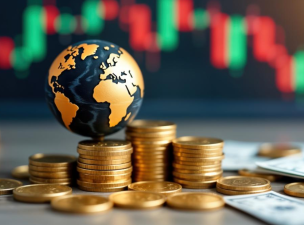
Capital may flow from dollar assets in four directions:
- Emerging Markets: Arbitrage trading recovers, with funds flowing into high-yield currencies such as the Brazilian Real and the South Korean Won;
- Commodities: Dollar depreciation pushes up prices for gold, silver, and industrial metals (such as copper);
- Non-US Developed Markets: The Canadian dollar and the Australian dollar are favored due to better-than-expected economic data. Increased volatility in risky assets.
- US Stocks: Loose liquidity is a short-term boon for technology stocks, but the risk of valuation bubbles is rising; if policy missteps lead to a rebound in inflation, it could trigger a sharp correction.